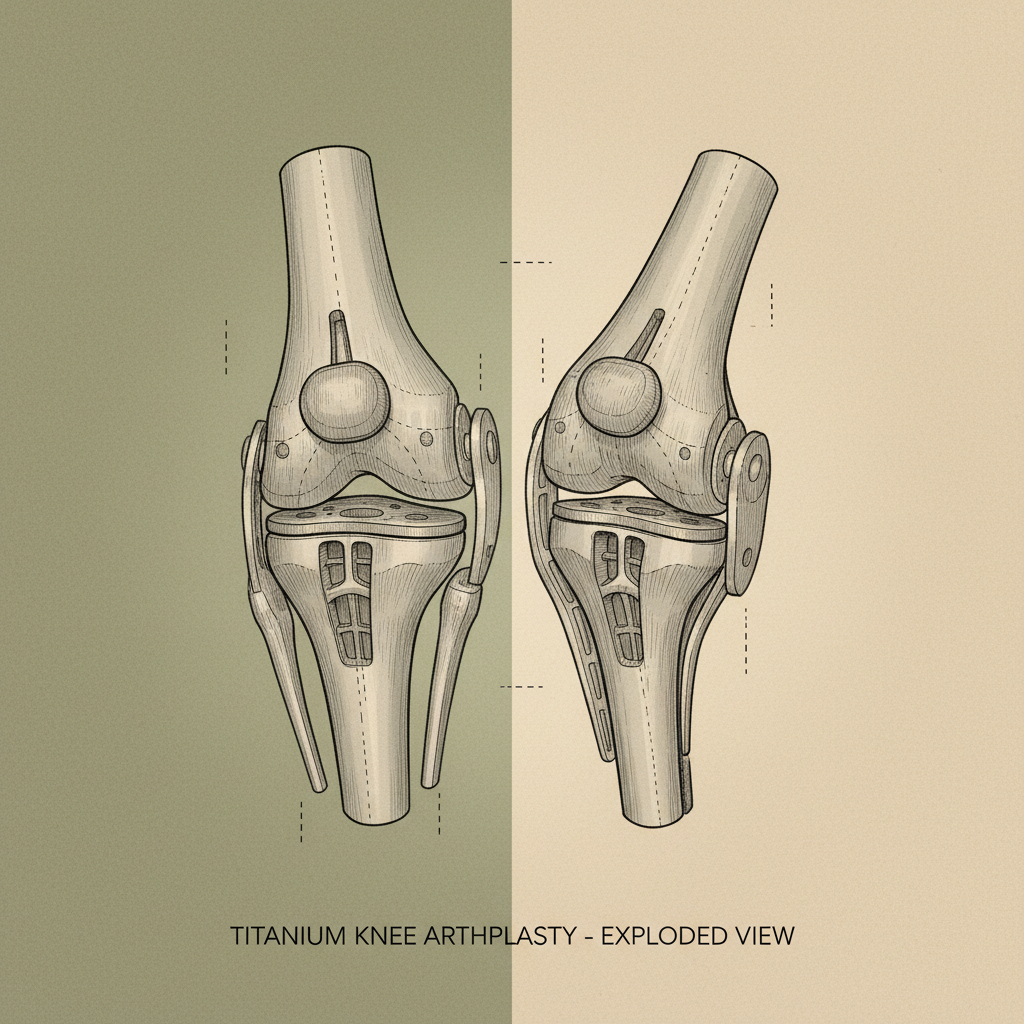
The pursuit of mobility and pain-free living has led to significant advancements in orthopedic surgery, particularly in the realm of private knee replacement. For many patients, the ability to choose a specialized, private healthcare path ensures a more personalized approach to surgical precision and postoperative care, which is critical for long-term joint functionality. Understanding the nuances of these procedures allows patients and providers to optimize outcomes and restore quality of life.
Globally, the demand for high-quality joint implants is surging due to an aging population and a rise in active lifestyles that put more stress on the musculoskeletal system. The transition toward private knee replacement options often reflects a desire for shorter waiting lists, access to the latest cobalt-chromium-molybdenum alloy implants, and a more tailored rehabilitation protocol. This shift is not merely about convenience but about accessing cutting-edge medical engineering.
By integrating advanced materials science with precise surgical techniques, modern private knee replacement offers a sustainable solution to chronic joint degeneration. From the use of lost-wax casting for implant blanks to the adherence to ISO5832-4 standards, every detail is engineered to reduce wear and tear. This comprehensive approach ensures that the prosthetic joint mimics natural anatomy, providing patients with the confidence to return to their daily activities.
Global Context of Private Knee Replacement
On a global scale, the prevalence of osteoarthritis and joint trauma has created a critical need for efficient surgical interventions. In many developed nations, public healthcare systems struggle with extensive wait times, leading an increasing number of patients to seek private knee replacement to avoid prolonged pain and muscle atrophy. Data from ISO and international health bodies suggest that the precision of the implant—often dictated by the manufacturing quality of the cobalt-chromium-molybdenum alloy—is the primary determinant of the implant's lifespan.
The challenge lies in balancing accessibility with the high cost of precision engineering. While public sectors provide basic care, the private sector drives innovation in "Revision Femoral Condyles" and customized blanks. This competitive environment encourages manufacturers to refine the lost-wax casting process, ensuring that every private knee replacement component meets stringent tolerances of ±0.3mm, thereby reducing the risk of surgical failure and revision surgery.
Defining the Scope of Private Knee Replacement
In simple terms, private knee replacement refers to the surgical procedure of replacing a damaged knee joint using prosthetic components, conducted within a private healthcare framework. Unlike standardized public procedures, this approach often emphasizes the use of premium materials, such as high-grade cobalt-chromium-molybdenum alloys, and provides the surgeon with more flexibility to customize the implant's fit to the patient's specific anatomical needs.
From an industrial perspective, this process is deeply connected to the specialized manufacture of medical-grade casting. The "blank" or the raw cast form of the joint must be produced with extreme purity to ensure biocompatibility. When a patient opts for a private knee replacement, they are essentially benefiting from a supply chain that prioritizes high-performance mechanical properties and strict adherence to standards like YY0117.3-2005.
Ultimately, the goal of this specialized medical service is to restore a natural range of motion and eliminate chronic pain. By focusing on the intersection of patient-centric care and high-end metallurgy, private knee replacement transforms a necessary medical intervention into a restorative experience that empowers patients to regain their independence and mobility.
Core Components for Surgical Success
The success of a private knee replacement depends heavily on the biocompatibility of the materials used. Cobalt-chromium-molybdenum alloys are preferred because they resist corrosion within the harsh environment of the human body and minimize the risk of allergic reactions, ensuring the implant integrates seamlessly with the bone.
Dimensional Precision is another critical factor. Utilizing a state-of-the-art lost-wax casting process allows for the creation of components with a machining allowance tolerance of ±0.3mm. In a private knee replacement, this precision enables the orthopedic surgeon to fine-tune the implant, ensuring a perfect anatomical fit that reduces postoperative discomfort.
Finally, Mechanical Durability ensures that the joint can withstand the repetitive stress of daily walking and climbing. High-quality alloy blanks provide the necessary hardness and fatigue resistance, which are essential for the longevity of a private knee replacement, reducing the likelihood of wear-induced inflammation or implant loosening over decades.
Performance Factors in Joint Implant Engineering
Evaluating the performance of private knee replacement components requires a look at several technical benchmarks. From the surface finish of the femoral condyle to the load-bearing capacity of the alloy, each metric contributes to the overall patient outcome. The synergy between the casting quality and the final machining determines how "natural" the joint feels during movement.
When comparing different manufacturing methods for private knee replacement, the lost-wax casting method consistently outperforms traditional forging in terms of geometric complexity and surface integrity. This allows for an anatomical design that supports a full range of motion, directly impacting the patient's ability to return to a high-activity lifestyle.
Comparison of Performance Metrics for Private Knee Replacement Components
Real-World Applications and Patient Use Cases
In practice, private knee replacement is frequently utilized by patients who require a rapid return to work or sports. For instance, professional athletes or high-performance individuals often seek private care to access "Revision Femoral Condyles" that are specifically tailored to their higher-than-average joint stress levels. This ensures that the implant not only restores mobility but also supports intense physical activity.
Furthermore, in regions with advanced medical tourism, private knee replacement has become a gold standard for international patients. These individuals travel to specialized clinics that utilize the highest grade cobalt-chromium-molybdenum alloys, ensuring that the surgery performed is based on the most current ISO standards, providing them with a global guarantee of safety and durability.
Long-Term Value and Patient Reliability
The long-term value of a private knee replacement extends far beyond the initial surgery. By investing in premium materials and precision casting, patients significantly reduce the risk of "aseptic loosening"—the primary cause of implant failure. The superior mechanical properties of the alloy ensure that the prosthetic remains securely bonded to the bone, providing stability for twenty years or more.
From an emotional perspective, the reliability of a high-quality private knee replacement restores dignity and autonomy. The ability to walk without a cane or climb stairs without assistance has a profound impact on mental health. When a patient trusts that their implant is manufactured to ISO5832-4 standards, the anxiety surrounding potential failure is replaced by a confidence in their own physical capabilities.
Moreover, the economic logic of opting for a premium private knee replacement is found in the avoidance of revision surgery. Revision surgeries are more complex, costlier, and carry higher risks. By selecting a high-precision implant from the start, patients maximize their "first-time success rate," which is the most critical metric in orthopedic value.
Future Innovations in Knee Prosthetics
Looking forward, the field of private knee replacement is moving toward complete digitalization. We are seeing the rise of "Smart Implants" that can monitor wear and tear in real-time via embedded sensors. These innovations, combined with 3D-printed cobalt-chromium-molybdenum structures, will allow for implants that are not just "anatomically correct" but "patient-specific," matching the exact bone density and geometry of the individual.
Sustainability is also becoming a core focus. The casting industry is exploring "Green Casting" techniques to reduce the environmental footprint of producing alloy blanks. By optimizing the lost-wax process to use biodegradable waxes and energy-efficient melting furnaces, the production of components for private knee replacement will become as sustainable as it is effective.
Additionally, advancements in surface coatings—such as bioactive hydroxyapatite—are being integrated into private knee replacement to accelerate osseointegration. This means the bone will grow into the implant faster, reducing the recovery period and allowing patients to return to their active lives even sooner than current protocols allow.
Comparative Analysis of Material Standards for Private Knee Replacement
| Material Standard |
Biocompatibility Score |
Wear Resistance |
Recommended Use |
| ISO5832-4 (CoCrMo) |
9.8 |
High |
Private Knee Replacement |
| YY0117.3-2005 |
9.5 |
High |
Standard Joint Implants |
| Ti-6Al-4V Alloy |
9.2 |
Moderate |
Stem/Acetabular Cups |
| Stainless Steel 316L |
7.5 |
Moderate |
Temporary Fixations |
| Polyethylene (UHMWPE) |
8.8 |
Low (Bearing) |
Joint Liners |
| Ceramic-on-Poly |
9.7 |
Very High |
High-Activity Patients |
FAQS
A private knee replacement typically offers shorter wait times and greater access to premium, customized implant materials, such as high-grade cobalt-chromium-molybdenum alloy. It allows for a more personalized surgical approach, often utilizing the latest "Revision Femoral Condyle" designs and precision-cast blanks that adhere to strict ISO standards, ensuring a better anatomical fit and a potentially faster recovery period.
Most modern high-quality implants used in private knee replacements are designed to last 15 to 25 years. The longevity depends heavily on the material's wear resistance and the precision of the initial fit. Using materials like CoCrMo alloy, which is highly resistant to corrosion and friction, helps maximize the lifespan of the joint, reducing the need for future revision surgeries.
Yes, the lost-wax casting process is widely considered superior for complex medical components. It allows for extreme precision (tolerances of ±0.3mm), which is essential for the anatomical curvature of a knee joint. This precision ensures that the private knee replacement fits the patient's bone structure more naturally, reducing postoperative pain and improving the range of motion.
The primary risks involve biocompatibility and wear debris. However, by utilizing certified materials that comply with ISO5832-4 and YY0117.3-2005, these risks are significantly minimized. Cobalt-chromium-molybdenum alloys are chosen specifically for their high biocompatibility, ensuring that the body does not reject the implant and that wear is kept to an absolute minimum over decades of use.
Absolutely. Many patients return to low-impact sports like swimming, cycling, and golf. With the use of high-performance alloys and precise surgical alignment common in private knee replacements, some patients even return to more active hobbies. However, it is always recommended to follow a professional rehabilitation protocol to ensure the implant settles correctly.
Candidates typically include individuals with severe osteoarthritis, rheumatoid arthritis, or post-traumatic joint damage who have not responded to conservative treatments. If you have chronic pain that limits your daily activities and you prefer a faster, more customized surgical experience with premium materials, a private knee replacement is likely an excellent option for you.
Conclusion
In summary, private knee replacement represents the pinnacle of combining medical necessity with high-end engineering. By leveraging cobalt-chromium-molybdenum alloys and the precision of lost-wax casting, these procedures offer a reliable, biocompatible, and durable solution for those suffering from joint degeneration. The focus on strict international standards and anatomical precision ensures that patients regain not only their mobility but their overall quality of life.
As we look toward the future, the integration of digital planning and sustainable manufacturing will further refine the outcomes of private knee replacement. For patients and providers alike, prioritizing the quality of the implant blank is the most effective way to guarantee long-term success. To learn more about our high-precision artificial joint components, visit our website: www.rays-casting.com.