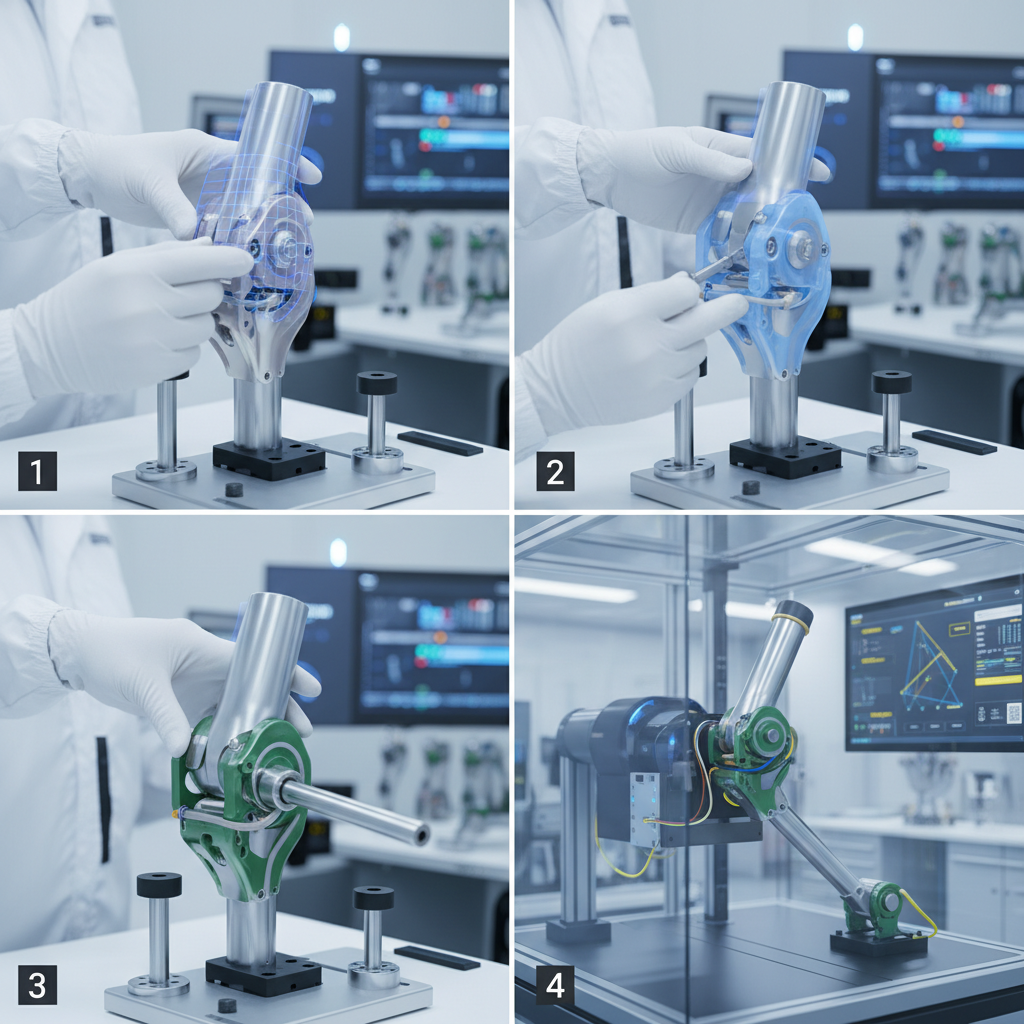
A revision knee replacement is a critical surgical intervention designed to replace a failing or worn-out artificial knee joint with a new, more stable implant. As the global population ages and the volume of primary knee replacements increases, the demand for high-quality revision components has surged. This procedure is not merely a repeat surgery but a complex reconstruction aimed at restoring mobility and eliminating chronic pain for patients whose initial implants did not last.
From a global health perspective, the necessity for revision surgery often stems from aseptic loosening, infection, or instability, challenging the durability standards of medical-grade materials. With the rise of active aging, patients are placing higher demands on their implants, leading to a shift in how manufacturers approach the biocompatibility and mechanical strength of revision hardware. Understanding the intricacies of this process is essential for healthcare providers and patients alike to ensure long-term success and quality of life.
The core benefit of advancing revision knee replacement technology lies in the ability to salvage bone stock and provide a customized fit for complex anatomical deficits. By integrating innovative materials and precision engineering, modern revision systems can significantly reduce the failure rate of secondary surgeries, offering patients a renewed sense of independence and physical dignity.
Global Relevance of Revision Knee Replacement
The global prevalence of osteoarthritis has led to a historic increase in primary arthroplasties, which inherently increases the statistical probability of future revision knee replacement procedures. According to industry trends and ISO standards for orthopedic implants, the "wear and tear" phase of first-generation implants is now coinciding with a demographic of patients who are more physically active than previous generations, necessitating more robust revision solutions.
In regions such as North America and Europe, the challenge lies in managing the complexity of bone loss associated with failed implants. The medical community is currently facing a critical need for implants that can integrate more effectively with host bone, reducing the risk of aseptic loosening and ensuring that the second surgery provides a permanent solution rather than a temporary fix.
Defining the Scope of Revision Surgery
In simple terms, a revision knee replacement is the surgical process of removing an existing artificial knee joint and replacing it with a new one. This is typically required when the primary implant has failed due to reasons such as infection, instability, or severe wear of the polyethylene liner. Unlike the primary surgery, a revision is often more complex because it involves dealing with scarred tissue and potentially diminished bone stock.
From an industrial standpoint, this procedure drives the development of "modular" implant systems. Modularity allows surgeons to tailor the implant to the specific bone loss of the patient, using stems and augments to bridge gaps in the femur or tibia. This connection to modern precision manufacturing is what allows for the restoration of joint alignment in patients who would otherwise face permanent disability.
Ultimately, the goal of revision surgery is to restore the humanitarian need for basic mobility. Whether it is enabling a patient to walk unassisted or returning them to their professional life, the precision of the hardware used in revision knee replacement directly impacts the quality of human life and the overall burden on global healthcare systems.
Core Components and Material Durability
The success of a revision knee replacement depends heavily on the biocompatibility and durability of its core components. High-grade Cobalt-Chrome (CoCr) alloys and Titanium are frequently utilized for the femoral and tibial components to provide the necessary structural rigidity while resisting corrosion within the harsh environment of the human body.
Advanced Highly Cross-Linked Polyethylene (HXLPE) is a critical factor in the longevity of revision knee replacement. By reducing wear debris—the primary cause of osteolysis and subsequent implant loosening—HXLPE ensures that the bearing surface remains smooth and functional for decades, effectively extending the interval between subsequent surgeries.
Furthermore, the integration of porous coatings and hydroxyapatite on the implant surfaces encourages osseointegration. In the context of a revision knee replacement, where bone quality is often compromised, these biological interfaces are essential for securing the implant without relying solely on bone cement, which can degrade over time.
Technical Factors Affecting Implant Stability
Implant stability is the cornerstone of success for any revision knee replacement. Stability is achieved through a combination of precise mechanical alignment and the use of extended stems. These stems distribute the load deeper into the medullary canal of the bone, bypassing areas of bone loss and providing a secure anchor that prevents the "rocking" motion that leads to early failure.
Beyond hardware, the surgical approach—incorporating robotic assistance and intraoperative navigation—has revolutionized how stability is measured. By ensuring the rotational alignment of the revision components is perfect, surgeons can maximize the contact area between the implant and the bone, significantly reducing the risk of post-operative instability.
Comparative Performance of Revision Knee Replacement Methods
Global Applications and Clinical Use Cases
In high-income healthcare systems, revision knee replacement is often used to address "activity-induced wear," where patients in their 50s or 60s outpace the lifespan of their primary implants. These cases focus on high-performance materials and customized geometries to allow the patient to return to low-impact sports and active lifestyles.
Conversely, in developing industrial zones or post-disaster recovery regions, the application of revision surgery often focuses on treating traumatic implant failure or severe infection caused by suboptimal sterile conditions during primary surgery. In these contexts, the focus shifts toward antimicrobial-coated implants and cost-effective modular systems that can be deployed in regional hospitals to restore basic walking functions.
Long-Term Value and Patient Outcomes
The long-term value of a successful revision knee replacement extends far beyond the absence of pain. It provides a restoration of dignity, allowing patients to avoid the psychological depression often associated with chronic immobility. When an implant is engineered for longevity, it reduces the lifetime healthcare cost by eliminating the need for a third or fourth surgery.
From a reliability perspective, the transition to more biologically active surfaces has increased the "survivorship" rate of revision implants. Patients now experience more natural joint kinematics, which means less muscle atrophy and a more rapid return to daily activities. This logical progression in design creates a trust-based relationship between the patient and the medical technology.
Sustainability is also an emerging factor; as we refine the manufacturing of these devices, the industry is moving toward reducing waste in the production of specialized revision kits. The social impact is profound: an aging population that remains mobile is an aging population that remains contributing and independent.
Future Trends in Revision Orthopedics
The future of revision knee replacement is being shaped by the digital transformation of the operating room. 3D printing (Additive Manufacturing) is allowing for the creation of patient-specific implants that match the exact bone void of a patient, virtually eliminating the "trial and error" process of modular fitting and significantly reducing surgical time.
We are also seeing the integration of "Smart Implants" equipped with sensors that can detect early signs of infection or loosening before they become symptomatic. This shift toward predictive maintenance of the human body will allow for minimally invasive adjustments rather than full-scale replacement surgeries, moving the industry toward a more sustainable healthcare model.
Furthermore, the development of bio-absorbable scaffolds and stem cell therapies aims to regenerate bone loss before the revision knee replacement is performed. By combining biological regeneration with mechanical support, the next generation of implants will not just replace the joint but integrate seamlessly into the living tissue.
Analysis of Revision Knee Replacement Technological Evolution
| Evolution Stage |
Primary Material |
Key Innovation |
Patient Outcome |
| Early Revision |
Stainless Steel |
Basic Cementation |
Moderate Mobility |
| Mid-Generation |
CoCr Alloy |
Modular Stems |
Increased Stability |
| Modern Era |
Ti / HXLPE |
Porous Coatings |
Long-term Bone Integration |
| Digital Phase |
Custom Ti Alloy |
3D Printed Implants |
Precision Fit / Low Pain |
| Smart Phase |
Bio-Composite |
Embedded Sensors |
Predictive Failure Detection |
| Regenerative |
Bio-Active Hybrids |
Stem Cell Integration |
Biological Restoration |
FAQS
Revision surgery is more complex because the surgeon must first remove the existing implant, which often involves dealing with bone loss and significant scar tissue. Additionally, the anatomy may have changed, requiring modular components and longer stems to achieve stability, whereas primary surgery typically works with intact bone.
With modern Highly Cross-Linked Polyethylene (HXLPE) and improved osseointegration techniques, many revision implants are designed to last 15 to 25 years. However, the lifespan depends heavily on the patient's activity level and the amount of bone stock available at the time of surgery.
The primary risks include infection, blood clots, and the possibility of continued instability if bone loss is too severe. However, these risks are mitigated by using antimicrobial coatings and robotic-assisted precision alignment to ensure the implant is perfectly seated.
Yes, additive manufacturing is now used to create custom-made implants for patients with extreme bone loss. By using a CT scan of the patient's knee, engineers can print a titanium implant that fits the exact remaining bone structure, providing far superior stability compared to standard modular parts.
Yes, instability or a "loose" feeling is one of the most common reasons for a revision. Surgeons can resolve this by replacing the polyethylene liner or using a more constrained implant system that provides mechanical stability when the patient's own ligaments are insufficient.
Recovery for a revision is generally slower and more intensive than a primary replacement. Because of the increased surgical complexity and tissue trauma, patients often require a longer period of physical therapy to regain their full range of motion and strength.
Conclusion
In summary, revision knee replacement represents a vital intersection of advanced metallurgy, precision engineering, and clinical expertise. By addressing the inevitable failures of primary implants through modularity, improved biocompatibility, and robotic precision, this procedure restores mobility and quality of life to millions of patients worldwide. The focus has shifted from simply "replacing" a joint to "optimizing" the biological and mechanical interface for lifelong stability.
Looking forward, the integration of 3D printing and smart-sensor technology will likely make revision surgeries less invasive and more predictable. For patients and providers, the goal remains clear: to provide a durable, pain-free solution that adapts to the unique needs of the human body. To learn more about high-precision orthopedic solutions, visit our website: www.rays-casting.com.