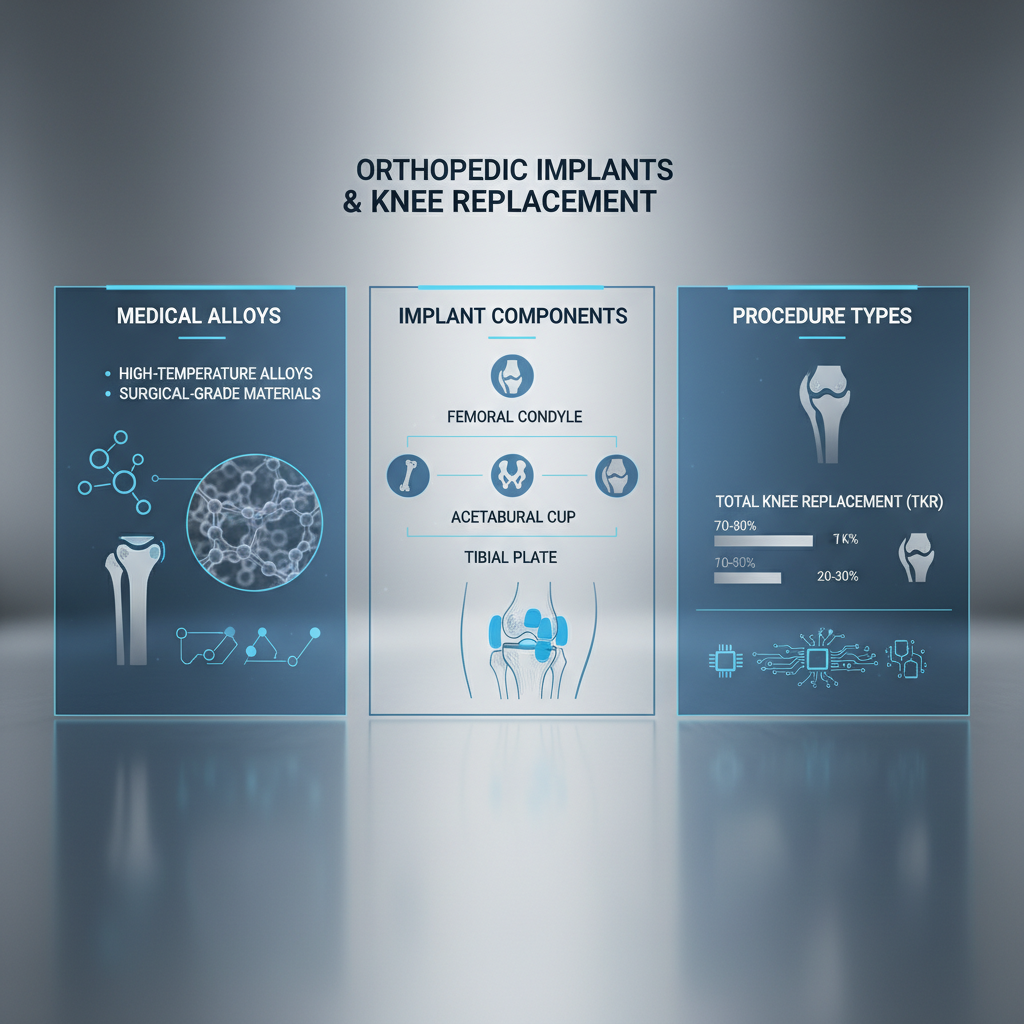
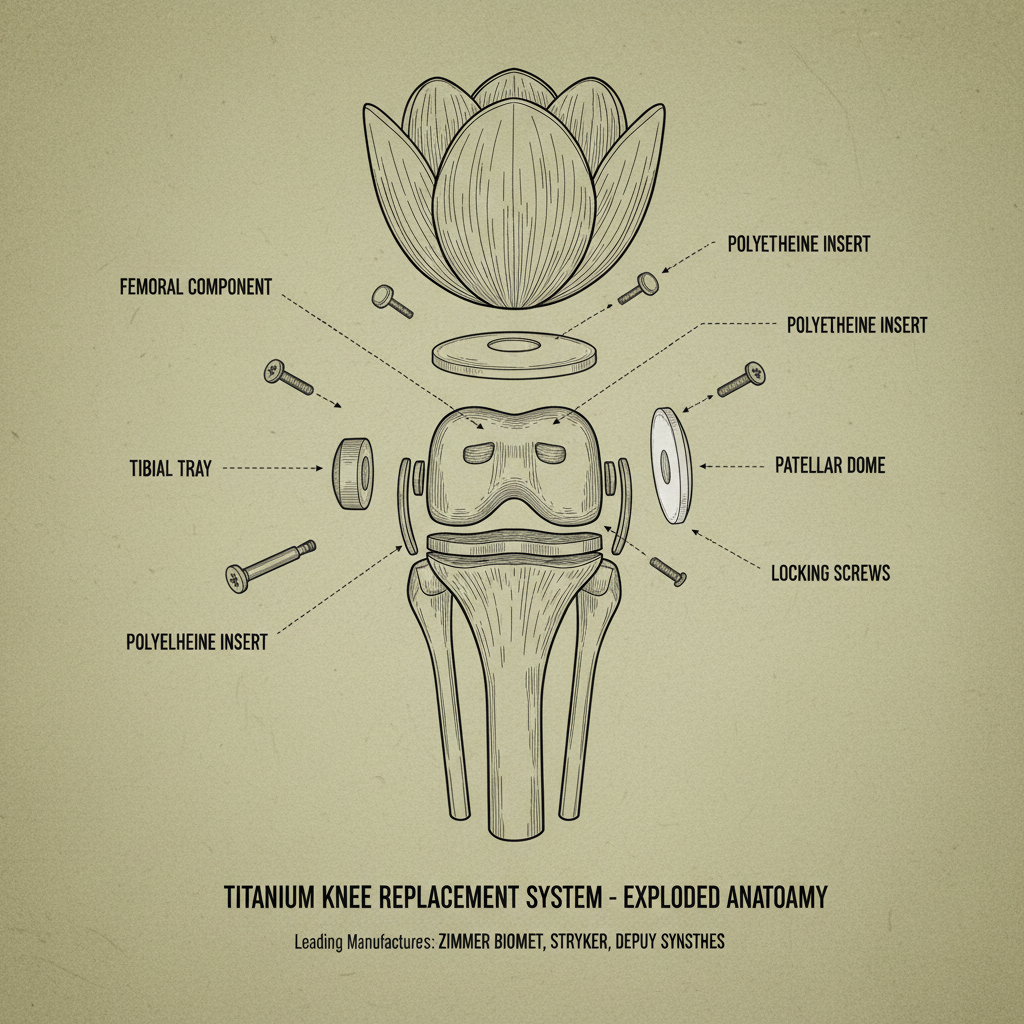
Understanding the various types of knee replacement surgery is essential for patients and healthcare providers alike, as the choice of procedure directly impacts recovery time and long-term joint functionality. With an aging global population and an increase in active lifestyles, the demand for precise orthopedic interventions has surged, making it critical to match the specific surgical approach to the patient's anatomical needs.
Modern medical manufacturing has evolved significantly, offering implants that are more biocompatible and durable than ever before. By exploring the different types of knee replacement surgery, from partial resurfacing to complete joint reconstruction, patients can make informed decisions that prioritize their quality of life and mobility.
Ultimately, the goal of these procedures is to alleviate chronic pain and restore the natural mechanical alignment of the leg. Whether addressing osteoarthritis, rheumatoid arthritis, or post-traumatic injury, the integration of advanced materials and robotic-assisted techniques ensures that these surgeries are safer and more effective than previous generations of joint replacement.
Global Context of Knee Replacement Evolution
On a global scale, the prevalence of degenerative joint disease has transformed the landscape of orthopedic surgery. According to data aligned with ISO standards for medical devices, millions of procedures are performed annually to combat the debilitating effects of knee cartilage loss. The shift toward personalized medicine has led to a diversification in the types of knee replacement surgery, moving away from a "one size fits all" approach to highly customized implant designs.
The challenge today lies in the disparity of access to these advanced technologies across different regions. While developed nations integrate AI-driven planning, emerging economies are focusing on scalable, cost-effective implant solutions that maintain high safety profiles. This global evolution emphasizes the need for standardized manufacturing processes in the production of cobalt-chromium and polyethylene components to ensure reliability regardless of where the surgery is performed.
Defining the Core Types of Knee Replacement Surgery
At its most basic level, knee replacement is the surgical removal of damaged bone and cartilage and its replacement with an artificial joint (prosthesis). The types of knee replacement surgery are primarily categorized by the extent of the joint involved. Total Knee Arthroplasty (TKA) involves replacing the entire joint, whereas Partial Knee Arthroplasty (PKA) only addresses the damaged compartment, preserving healthy ligaments and bone.
Beyond the extent of the replacement, surgeons may choose between cemented and cementless fixation. Cemented implants use a bone cement (PMMA) to lock the prosthesis in place immediately, which is often preferred for elderly patients with lower bone density. In contrast, cementless implants feature porous surfaces that encourage the patient's own bone to grow into the implant, offering a potentially longer lifespan for younger, more active patients.
These distinctions are not merely technical; they are humanitarian imperatives. By selecting the correct surgical method, surgeons can reduce the risk of revision surgery and minimize the physical trauma to the patient. The industry's focus has shifted toward "kinematic alignment," which aims to restore the knee's natural motion rather than forcing it into a standardized mechanical axis.
Key Factors Influencing Surgical Choice
When determining the most appropriate types of knee replacement surgery, durability is a primary consideration. The materials used—typically a combination of medical-grade alloys and ultra-high-molecular-weight polyethylene—must withstand millions of cycles of loading and unloading without significant wear.
Scalability and anatomical fit are equally critical. Modern surgical planning uses 3D imaging to ensure the implant matches the patient's unique femoral and tibial geometry. This precision reduces the likelihood of postoperative instability and improves the overall range of motion, making the specific types of knee replacement surgery more effective for diverse body types.
Lastly, cost-efficiency and recovery time play a role in the decision-making process. Partial replacements generally offer a faster return to daily activities and less blood loss, making them an attractive option for patients who do not require a full joint overhaul. The balance between surgical invasiveness and long-term stability remains the central focus of orthopedic consultation.
Clinical Efficacy and Patient Outcomes
The success of various types of knee replacement surgery is measured by a combination of pain reduction, joint stability, and the patient's return to functional movement. Clinical data indicates that while total replacements provide a comprehensive solution for widespread arthritis, partial replacements often result in a "more natural" feeling knee due to the preservation of the anterior cruciate ligament (ACL).
Comparative studies show that the integration of robotic assistance has significantly reduced outliers in implant positioning. By achieving a higher degree of accuracy, surgeons can optimize the tension of the surrounding soft tissues, which directly correlates with a decrease in postoperative pain and a shorter rehabilitation period for all types of knee replacement surgery.
Clinical Success Rates by Types of Knee Replacement Surgery
Global Applications in Diverse Patient Populations
The application of different types of knee replacement surgery varies significantly across global demographics. In Western Europe and North America, there is a growing trend toward "outpatient" total knee replacements, where patients are discharged the same day thanks to minimally invasive techniques and advanced analgesic protocols.
In contrast, in remote industrial zones or developing regions, the focus is often on providing durable, high-value implants that can last decades without the need for frequent follow-ups. Organizations working in post-disaster relief or humanitarian aid often prioritize modular implant systems that can be easily shipped and implemented by regional surgeons, ensuring that mobility is restored to those with traumatic joint injuries.
Long-Term Value and Socio-Economic Impact
The long-term value of selecting the correct types of knee replacement surgery extends beyond the individual to the broader economy. By restoring mobility to the aging workforce and elderly population, these surgeries reduce the burden on social care systems and allow individuals to maintain their independence and dignity.
From a logical perspective, the initial investment in a high-quality, anatomically correct implant reduces the lifetime cost of care by delaying or eliminating the need for revision surgeries. Revision surgeries are more complex, more expensive, and carry higher risks, making the "first-time right" approach a critical economic objective for healthcare providers.
Emotionally, the restoration of movement allows patients to reconnect with their families and hobbies, significantly reducing the rates of depression associated with chronic pain and immobility. The trust built between the patient and the surgical team through a successful outcome reinforces the reliability of modern medical manufacturing.
Future Innovations in Joint Prosthetics
The future of types of knee replacement surgery is being shaped by digital transformation and material science. We are seeing the rise of 3D-printed customized implants that are tailored to a patient's exact bone morphology, eliminating the need for intraoperative adjustments and reducing surgery time.
Furthermore, the integration of "smart implants" equipped with embedded sensors will allow doctors to monitor joint wear, inflammation, and patient activity levels in real-time. This transition toward proactive maintenance will transform how we manage joint health, moving from reactive surgery to predictive care.
Sustainability is also becoming a priority in the manufacturing sector. The industry is exploring bio-absorbable materials and green manufacturing processes to reduce the environmental footprint of prosthetic production without compromising the structural integrity of the device.
Comparative Analysis of Knee Replacement Technologies
|
Surgical Method
|
Recovery Speed
|
Implant Longevity
|
Invasiveness Level
|
| Total Knee (Cemented) |
Moderate |
15-20 Years |
High |
| Partial Knee (PKA) |
Fast |
10-15 Years |
Low |
| Total Knee (Cementless) |
Moderate |
20+ Years |
High |
| Robotic-Assisted TKA |
Fastest |
20+ Years |
Moderate |
| Revision Knee Surgery |
Slow |
10-15 Years |
Very High |
| Custom 3D-Printed Joint |
Fast |
25+ Years |
Moderate |
FAQS
Total knee replacement involves replacing the entire joint surface, whereas partial replacement only targets the damaged compartment. Partial surgery is less invasive, preserves more natural bone and ligaments, and typically offers a faster recovery, but it is only an option if the damage is localized to one area of the knee.
Modern implants are designed for longevity. On average, total knee replacements last 15 to 20 years, with some newer cementless or robotic-assisted options potentially lasting longer. Factors such as patient age, activity level, and the quality of the surgical alignment play a significant role in the lifespan of the prosthesis.
Robotic assistance provides surgeons with enhanced precision in bone cutting and implant positioning. This often leads to a more accurate fit and better balance of the soft tissues, which can reduce postoperative pain and improve the overall range of motion compared to traditional manual techniques.
Cemented implants use a medical-grade adhesive to bond the prosthesis to the bone immediately. Cementless implants have a porous surface that allows the patient's own bone to grow into the implant over time. Cementless options are often preferred for younger patients with strong bone quality to provide a more permanent biological bond.
A revision is necessary when the original implant fails due to wear and tear, becomes loose, gets infected, or if the joint becomes unstable. Revision surgeries are more complex as they involve removing the old prosthetic components and replacing them with new ones, often requiring additional bone grafts or specialized augmentations.
Yes, most patients can return to low-impact activities like swimming, cycling, and golfing. While high-impact sports (like running or jumping) are generally discouraged to prevent premature wear of the implant, partial knee replacements often allow for a more active return to movement due to the preservation of the natural ligaments.
Conclusion
Navigating the various types of knee replacement surgery reveals a sophisticated intersection of medical expertise and precision engineering. From the broad applicability of total knee replacements to the targeted precision of partial replacements and robotic assistance, the primary goal remains the restoration of pain-free mobility and a higher quality of life. The key to success lies in the careful alignment of patient anatomy, implant material, and surgical technique.
Looking forward, the integration of additive manufacturing and smart sensing will likely make joint replacement even more personalized and sustainable. For patients and clinicians, staying informed about these advancements ensures that the chosen surgical path is optimized for the longest possible joint lifespan. To learn more about high-quality orthopedic solutions and manufacturing standards, visit our website: www.rays-casting.com.