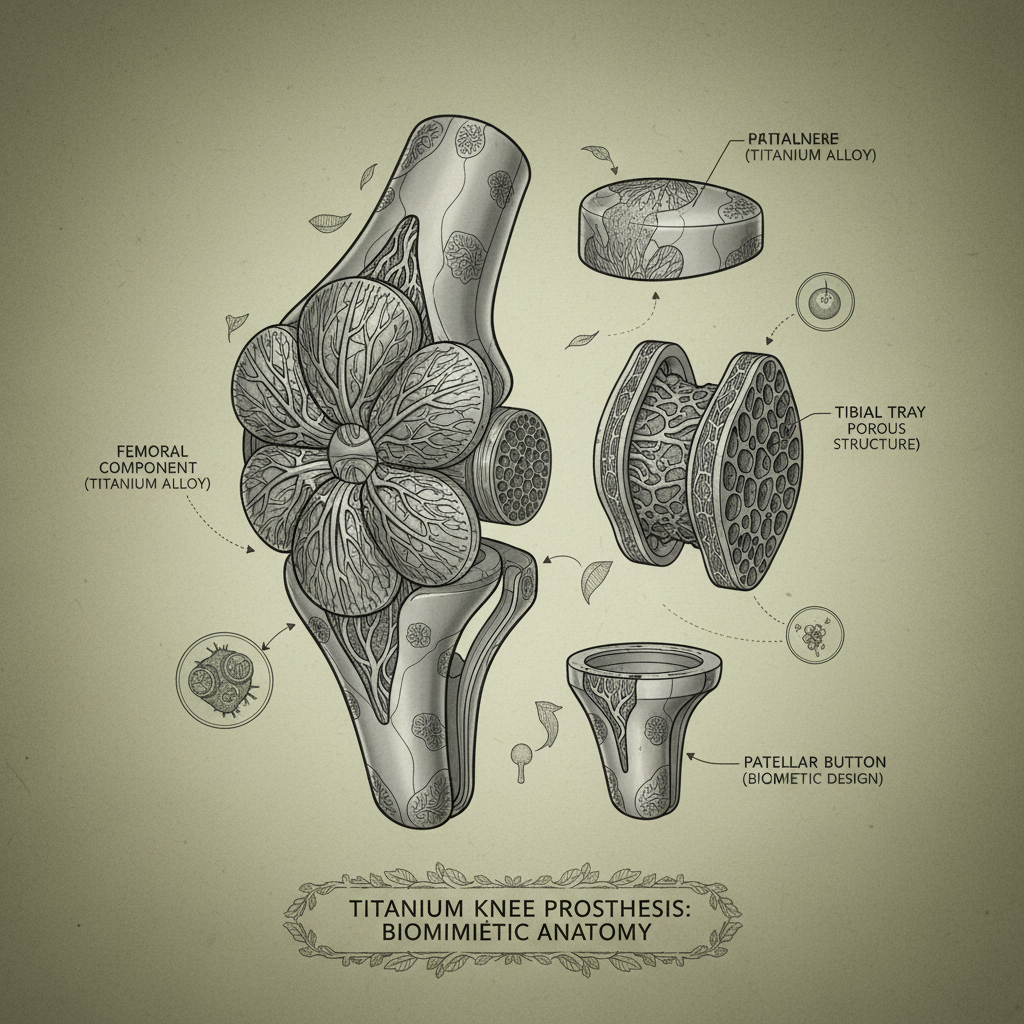
Honestly, the whole titanium for knee replacement thing... it's been blowing up lately. Everyone's chasing lighter, stronger materials, and titanium keeps coming up. Been seeing it more and more on these construction sites, not necessarily in the knee replacements themselves, mind you, but in the tooling used to manufacture them. Precision is key, right? You can't just slap a knee together. It's a whole different ballgame than, say, building a shed.
You know, I've noticed, a lot of designers get tripped up on the surface finish. They want it perfect, mirror-polished, all fancy. But out here, in the real world, that just means more scratches, more potential for corrosion. Function over form, that's what I always say.
And it’s not just titanium alloys. We’re talking about different grades, different treatments. Ti-6Al-4V is the workhorse, of course. Feels…substantial. Cold to the touch, a bit like stainless steel, but noticeably lighter. You can smell the machining oil on it, even after it’s cleaned. That’s a good sign. Means it’s been properly worked.
The Rising Demand for Titanium in Orthopedic Implants
To be honest, the shift towards titanium in knee replacements isn’t exactly new, but it’s accelerating. There's a global aging population, more people staying active later in life... knees are taking a beating. And people expect a longer-lasting, more biocompatible solution. We went to a factory in Changzhou last time and the demand there was unbelievable.
It's not just the demand, it’s the regulatory pressure too. More stringent standards mean materials need to be thoroughly vetted, and titanium consistently meets those requirements. They’re testing everything – fatigue strength, corrosion resistance, even the way it interacts with bone tissue. It’s complex stuff.
Understanding Titanium Alloys Used for Knee Replacement
Have you noticed how many different 'titanium' alloys there are? It's not just one thing. Ti-6Al-4V is the standard, sure. It’s got a good balance of strength, weight, and corrosion resistance. But then you get into beta titanium alloys, which are more flexible, better for mimicking natural bone. And there are alloys with niobium, zirconium, molybdenum… each one tweaks the properties a little bit.
The surface treatment is crucial too. Often they’ll apply a hydroxyapatite coating – that’s basically bone mineral. Helps the implant integrate with the surrounding tissue. I saw a process where they use plasma spraying, which is basically shooting molten hydroxyapatite onto the titanium surface. It’s messy, noisy, and smells awful, but it works.
Strangely enough, a lot of the really high-end stuff is now using additive manufacturing - 3D printing. Allows them to create complex geometries that are impossible with traditional machining. But that adds cost, naturally.
Key Factors Influencing Titanium's Performance in Knee Replacements
Durability, obviously. A knee replacement needs to withstand millions of cycles of loading and unloading. That's what the fatigue testing is all about. They put those implants through hell in the lab, but it’s still not the same as real-world use.
Biocompatibility is huge. You don’t want the body rejecting the implant. Titanium’s naturally quite biocompatible, forms a passive oxide layer that prevents corrosion and minimizes immune response. But it’s not foolproof. Allergies are rare, but they do happen. And there’s always the risk of wear particles causing inflammation.
Weight reduction is a big driver. Titanium is significantly lighter than cobalt-chrome, which was the previous standard. Less weight means less stress on the surrounding tissues and potentially faster recovery times. But lighter isn't always better, you need to balance it with strength and stability.
Real-World Applications and Global Adoption
I encountered this at a factory in Germany a while back. They were focused on customized titanium knee replacements, specifically for athletes. The idea is to create an implant that perfectly matches the patient's anatomy and activity level. It’s expensive, but if you're a pro cyclist, or a marathon runner, you're willing to pay for the best.
You see a lot of adoption in countries with advanced healthcare systems – the US, Japan, Germany, Australia. But increasingly, it’s spreading to emerging markets as well, as people demand better quality of life. India and China are both big players now.
Anyway, I think the biggest impact is on active seniors. People are living longer, staying active longer, and they want to keep doing what they love. Titanium implants help make that possible.
Titanium Knee Replacement Performance Metrics
Advantages and Long-Term Value Proposition
The biggest advantage? Longevity. These things are built to last. And that saves money in the long run, even if the initial cost is higher. Less revision surgeries, less pain, better quality of life. It's not just about the money.
It also allows for more precise surgical planning. With titanium, you can get a more accurate fit, which reduces the risk of complications. And, honestly, it just feels better to work with. It's predictable.
Future Trends and Innovations in Titanium Knee Replacement
Customization is the future, without a doubt. 3D printing is going to make that even more accessible. We’re also seeing more research into surface modifications – different coatings to enhance bone integration and reduce wear.
And the integration of sensors... that's fascinating. Imagine an implant that can monitor its own performance and alert the doctor to any potential problems. It sounds like science fiction, but it’s coming.
Robotics are also playing a bigger role in surgery. More precise placement of the implant, less trauma to the surrounding tissues. It's all about minimizing the impact on the patient.
Challenges and Solutions in Implementing Titanium Technology
The cost, obviously. Titanium is expensive. And the manufacturing processes can be complex. That's why you see a price difference between different brands. But you get what you pay for, generally.
Another challenge is the machining. Titanium is notoriously difficult to machine. It work-hardens, meaning it gets harder the more you work it. You need specialized tools and skilled machinists. I remember this one time, a factory tried to cut corners on the tooling, and they ended up ruining a whole batch of implants.
I think the key is to focus on value, not just cost. A titanium knee replacement is an investment in your health and quality of life. It's worth paying a little extra for something that's going to last.
Summary of Key Challenges and Potential Solutions in Titanium Knee Replacement Implementation
| Challenge |
Impact on Implementation |
Potential Solution |
Implementation Timeline |
| High Material Cost |
Limits accessibility, increases overall implant cost. |
Optimize alloy usage, explore cost-effective manufacturing techniques. |
Short-term (1-2 years) |
| Difficult Machining |
Increased production time, potential for implant defects. |
Invest in specialized CNC machining equipment, improve toolpath strategies. |
Medium-term (3-5 years) |
| Surface Finish Requirements |
Demanding surface quality control, increased processing steps. |
Advanced surface treatment technologies (e.g., plasma spraying, PVD). |
Medium-term (3-5 years) |
| Biocompatibility Concerns |
Potential for allergic reactions or immune responses. |
Thorough biocompatibility testing, development of hypoallergenic alloys. |
Ongoing (Continuous improvement) |
| Long-Term Wear Resistance |
Potential for wear debris leading to inflammation and implant failure. |
Develop wear-resistant coatings, optimize implant design for minimal friction. |
Long-term (5+ years) |
| Supply Chain Vulnerabilities |
Reliance on limited titanium sources and processing facilities. |
Diversify titanium suppliers, invest in domestic titanium production capacity. |
Medium-term (3-5 years) |
FAQS
Cobalt-chrome is known for its excellent wear resistance and strength, making it a traditional choice. However, titanium is significantly lighter, potentially leading to faster recovery and reduced stress on surrounding tissues. Titanium also generally exhibits better biocompatibility, reducing the risk of allergic reactions, although cobalt-chrome is still widely used and considered safe for most patients. Cost is also a factor – titanium implants tend to be more expensive.
With proper care and activity management, a titanium knee replacement can last 15-20 years, or even longer. The actual lifespan varies based on individual factors like weight, activity level, and overall health. Regular follow-up appointments with your surgeon are crucial to monitor the implant’s condition and address any potential issues early on. New alloys and surface treatments are continually being developed to further extend implant longevity.
While titanium is generally well-tolerated, it's not necessarily the best choice for everyone. Factors like bone quality, allergies, activity level, and overall health are considered. Patients with certain metal sensitivities might not be ideal candidates, and those with significantly compromised bone structure may require additional augmentation. A thorough evaluation by an orthopedic surgeon is essential to determine suitability.
Recovery typically involves a period of physical therapy to regain strength and range of motion. Initially, you'll use assistive devices like a walker or crutches. Pain management is crucial in the early stages. Gradually, you'll progress to more independent ambulation and functional activities. Full recovery can take several months, but many patients experience significant pain relief and improved mobility within a few weeks.
Like any surgery, there are potential risks, including infection, blood clots, implant loosening, and nerve damage. Allergic reactions to titanium are rare but possible. Your surgeon will discuss these risks with you in detail and take steps to minimize them. Choosing an experienced surgeon and following post-operative instructions carefully can significantly reduce the risk of complications.
Absolutely! Advanced imaging techniques like CT scans and MRI are used to create a 3D model of your knee. This allows surgeons to plan the surgery precisely and select or even custom-design an implant that perfectly matches your anatomy. 3D-printed titanium implants are becoming increasingly common, offering a truly personalized solution.
Conclusion
Ultimately, titanium for knee replacement comes down to balance. It’s about weighing the benefits – longevity, biocompatibility, reduced weight – against the costs and complexities. It's not a magic bullet, but it represents a significant step forward in orthopedic technology. We're seeing more innovation in this area, which is great for patients.
But, and this is important, whether this thing works or not, the worker will know the moment he tightens the screw. It's the feel, the fit, the confidence that comes from knowing you’ve done a good job. All the fancy materials and advanced techniques in the world won't matter if the basics aren’t done right. Visit our website at rays-casting.com to learn more.